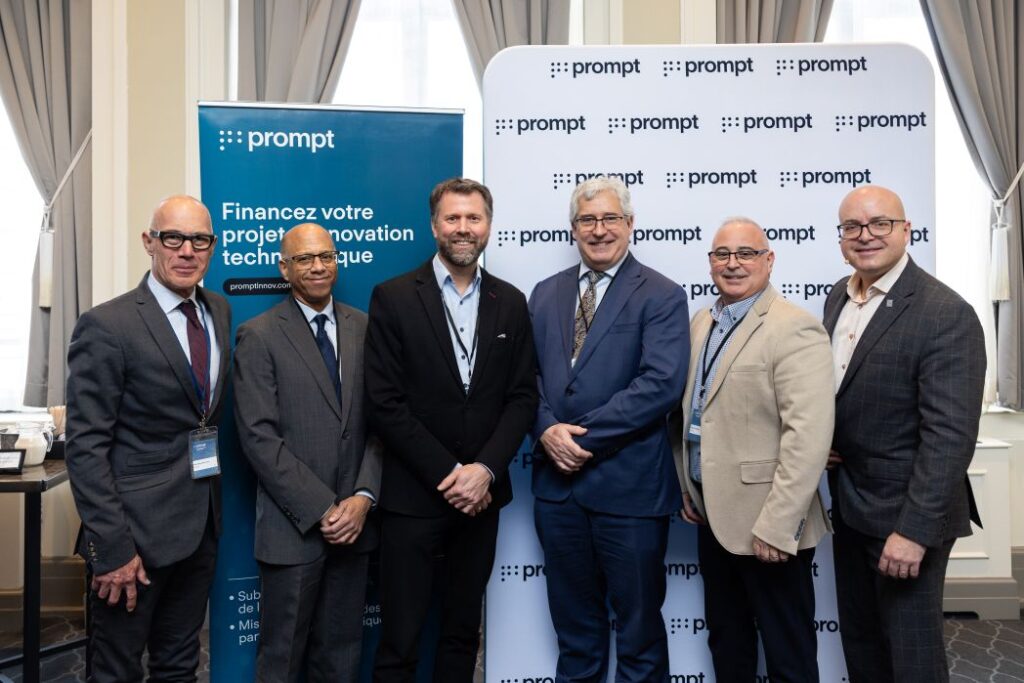


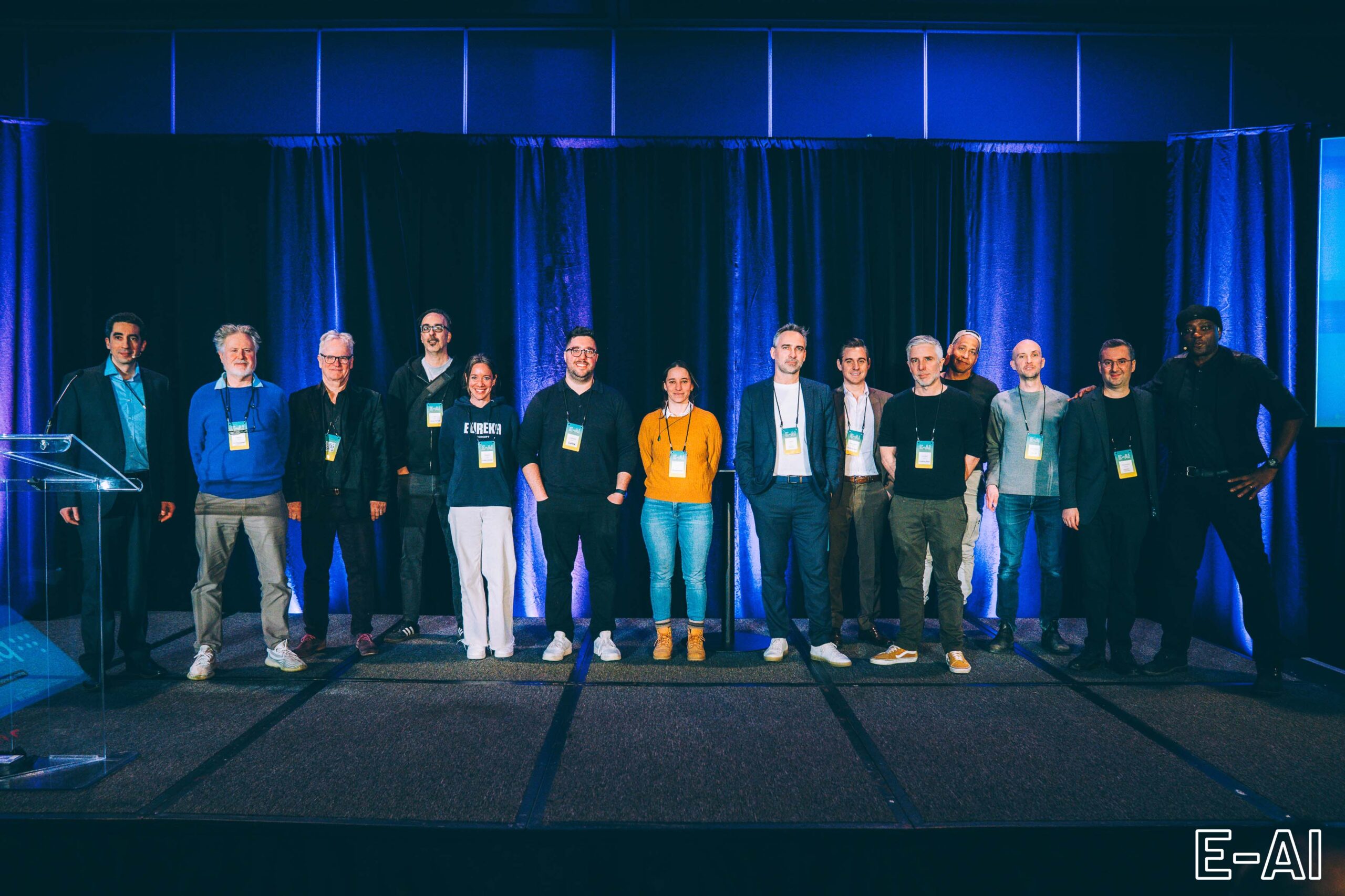
Selected from among eleven ambitious projects, these entrepreneurs receive a $5,000 grant to prepare for the grand finale and compete for a share of the $100,000 prize pool this year.
On the E-AI 2026 stage, the energy was palpable. Eleven entrepreneurs from the cultural and creative industries presented their vision: integrating artificial intelligence into the heart of their creation, production, or distribution processes. These ambitious projects are driven by a common conviction: AI is no longer just a tool, but a strategic lever for transforming Quebec’s cultural ecosystem in a sustainable way.
This first phase of pitches marked the official launch of ALCHIMIA 2026, an initiative led by Prompt in collaboration with E-AI. At the intersection of creativity, technology, and innovation, ALCHIMIA acts as a catalyst for entrepreneurs and studios seeking to push the boundaries of the cultural and creative industries through artificial intelligence.
Following the presentations, six entrepreneurs were selected to continue the adventure. They are Luc Leclerc (Above The Void), Emmanuel Durand (Coopérative Lab148), Jessica Allocca (Eureka Concept), Guillaume Parent (Gallea), David Rouxel (Konpanion) and Laurent Bernier (Sandscape AI). Each of them demonstrated not only the technological relevance of their project, but also its potential economic, artistic, and societal impact.
The selected entrepreneurs will receive a $5,000 grant from Prompt to help them prepare for the final pitches, which will take place next spring. This stage will be decisive: they will then try to stand out in order to obtain a share of the $100,000 in grants awarded as part of this edition.
The quality of the projects presented in this first phase reflects a rapidly evolving ecosystem. AI is approached with maturity: as a driver of immersive experiences, as a tool for analysis and personalization, and as a creative infrastructure serving artists and audiences.
ALCHIMIA 2026 is just getting started. Over the coming months, the finalists will refine their proposals, consolidate their business models, and demonstrate the strength of their vision. One thing is already clear: the future of Quebec’s cultural and creative industries is being written right now, and it is being written collaboratively.